
HDD Reamers and Hole Openers: Comparing Fluted, Fly Cutter and Rock Tools
A reamer order often arrives as a single diameter. That number describes a cutting envelope, but it leaves open the kind of cutting structure, the ground it will encounter and how the tool connects to the string. Two quotes for the same diameter can therefore describe substantially different tools.
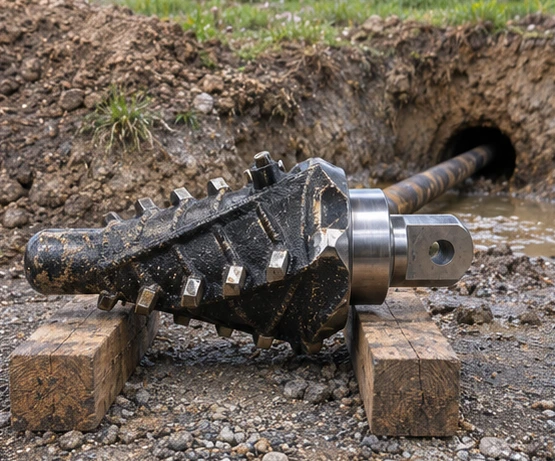
Compare the work each design is expected to do
A fluted body gives the supplier a starting point for discussing cutting action and the movement of fluid and spoil. A fly cutter presents a different open profile. A roller-cone rock hole opener uses a different cutting structure again. These names identify families, not a guarantee that any member suits a particular formation.
Explain what happened on a comparable crossing. Did material pack around the tool? Were cutting elements worn after a short interval? Were the returns different in a change of ground? Observations tied to a location and formation are more informative than simply asking for a more aggressive reamer.
- Ground and installed product
- Approved enlargement plan
- Selected tool and connection
Distinguish three different diameters
The product pipe diameter belongs to the installation. The planned bore diameter comes from the project design. The nominal cutting diameter belongs to the tool. They often appear together on a drawing, but exchanging one for another changes what the supplier quotes. Label each dimension and preserve its units.
Do not use a catalog size progression as a pass schedule. The choice of enlargement stages depends on ground, fluid management, rig capability and the installation design. For procurement, the useful document is the approved list of tool sizes with each intended connection and the responsible party's revision reference.
| Tool family | Catalog detail worth checking | Question for the supplier |
|---|---|---|
| Forged fluted | Diameter row and pipe-size column | Which connection is included? |
| Fly cutter | Cutter arrangement and body dimensions | Which wear components are replaceable? |
| Rock hole opener | Shaft, cone type and cone count | What configuration does the quoted drawing show? |
Read the table for the chosen family
Richdrill’s forged fluted table crosses reamer sizes with pipe diameter columns. Its rock hole opener table instead lists fields including shaft diameter, connection and cone configuration. A mark in one table does not carry across to another family. Attach the exact row or drawing used when asking for price and availability.
At comparison time, review cutter configuration, overall dimensions and both ends of the tool. Ask about replaceable parts, inspection criteria and the availability of matching components. A complete written description makes it easier to distinguish an acceptable alternative from a tool that only shares the same headline diameter.
If one family is unavailable, can the next available size serve as a substitute?
A size change affects the project as well as the purchase. Refer it to the people responsible for the bore plan before comparing prices. If the diameter stays the same but the tool family changes, request a new ground and connection review. Record the accepted alternative as a distinct line, with its own drawing and intended pass, so the crew receives the agreed configuration.
Further reading · Richdrill product information · Vermeer technical guide